Your Wholesale Price Is Not Your Cost: Building a Retail Price Structure That Survives Discounting
Buyers treat the wholesale unit price as the cost and the gap to retail as the margin, and both shortcuts collapse the moment a range meets a selling season. The wholesale price covers goods leaving a supplier. It does not cover the goods arriving at a customer, and it says nothing about the styles that never sell. A retail price that holds up is built from a landed cost structure and an assortment plan, not from a single multiple applied across a catalogue.
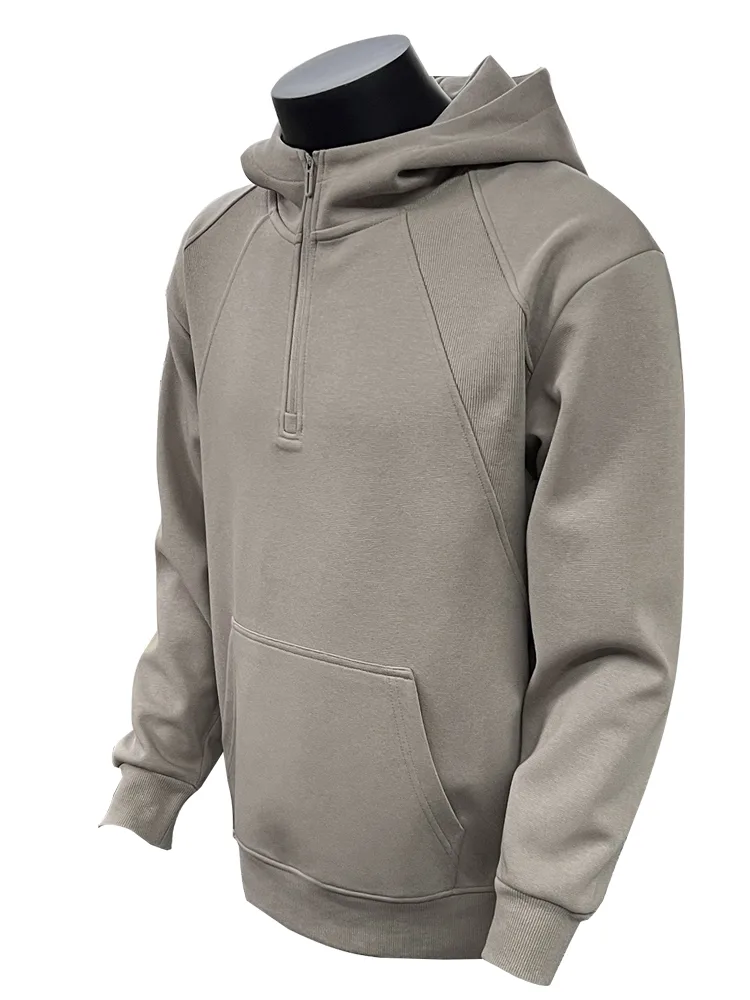
A piece like this is what a range leans on when it has to look like more than cloth. The retail price it can hold is set by that job, not by the wholesale cost it shares with plainer styles.
The wholesale price covers goods, not the journey to your shelf.
Freight, duty, inland haulage, warehousing, the cost of money while stock sits, and the damage that happens somewhere in between all land on the same unit as the garment. Two styles bought at the same price can carry very different landed costs, because one packs tighter and travels lighter than the other. Calculate landed cost per style before setting a retail price, and use the same basis across the range, or the comparison will quietly flatter whichever item ships well.
A markup multiple is not a target; coverage is.
A multiple tells you what one sold garment earns. It does not tell you what the range earns once slow styles, returns and markdowns have been paid for. Every garment sold at full price also pays for the ones that are not. A range priced at a comfortable multiple everywhere can still lose money: strong styles sell out early, weak ones get cut, and the mix decides the outcome, not the tag. Work out what share of the range has to sell at full price to carry the rest, then price so that share is realistic.
Every style in a range has a different job.
A range needs pieces that bring people in, pieces that carry the volume, and pieces that show what the label can do. Those jobs justify different retail prices even when the wholesale cost is identical, because the customer is paying for a role, not only for cloth. Applying one multiple everywhere flattens that structure and leaves the range looking interchangeable, pushing customers into comparing price. Decide the role of each style first, then set the price that role can hold.
Discount room has to exist at the tag, not appear at the till.
Markdowns are a plan, not an emergency. A price set so tight that any promotion means selling at cost has nowhere to go, and a deep cut is hard to reverse: customers remember the low price and wait for it to return. Build promotional room into the structure from the start, through the landed cost, through the role each style plays, and through choosing which pieces carry the reduction instead of discounting everything at once.
Before a range is priced, check the structure:
- Landed cost per style, not the wholesale price alone, as the base for every calculation.
- How much of the range must sell at full price to cover returns and markdowns.
- Which styles bring customers in, which carry volume, and which carry the label.
- Whether the price still works on a reorder, when costs change and the tag cannot.
- How much room is left for a promotion without selling at cost.
Practical takeaway.
Price from landed cost and from the job each style does. Keep a single multiple out of the decision, leave discount room in the tag from the beginning, and check that the price survives a reorder. A range priced on structure can be promoted without being destroyed. A range priced on a multiple has only one direction to move when the season turns.

The plainest piece on the table is usually the one carrying the volume, and the one with the least room to discount. That tension has to be built into the price from the beginning.
Comments / 评论
No comments yet. Be the first.